|
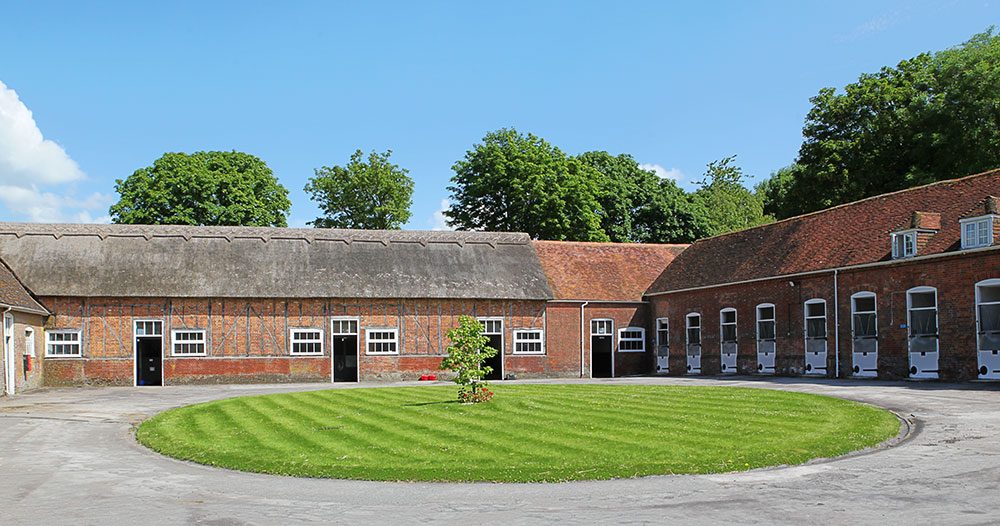
Kingwood House Stables is situated on the edge of the village of Lambourn overlooking the stunning Lambourn Downs.
Lambourn in West Berkshire, is more familiarly known as the Valley of the Racehorse as it has over 50 horseracing yards based in and around it. With the surrounding rolling hills the area lends itself perfectly to training racehorses.
The private facilities at Kingwood House Stables provide an excellent environment for racehorses to be trained effectively to their individual requirements.
The state of the art yard has the scope to stable over one hundred horses. To compliment this there are two all weather polytrack gallops, which are six furlongs and one mile long respectively as well as several grass gallops ranging in distance from six furlongs to over one mile . This provides varied terrain and first class training options for the horses to exercise and work on.
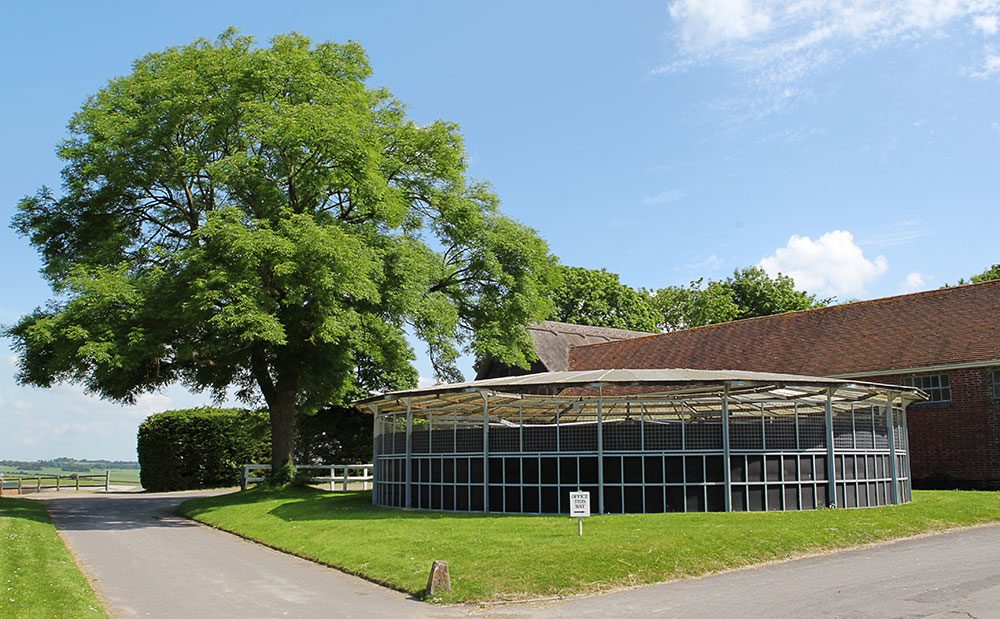
Before the horses leave the yard to go out on to the gallops for their morning exercise they are warmed up in the covered ride, this helps them relax and loosen up their muscles in preparation for their more strenuous work on the gallops.
 When the yearlings and young horses arrive the all-weather schooling ring as well as the indoor school, provide a safe and peaceful environment to begin their education. As preparing younger horses to accept a rider on their back generally happens in the winter months, the covered arenas come is very handy during cold and wet spells.
The two covered horse walkers are very beneficial for warming up or cooling off before and after exercise. They are sometimes also used during the afternoon for a leg stretch. For horses that are coming back from a break the horse walker is also a very effective conditioning aid, which helps strengthen muscles and bones before increasing their level of exercise.
A hydrotherapy spa, is the equivalent of an equine spa bath. The horses stand in bubbling water up to their knees, the temperature of the water can be hot or cold, or salt can be added. This assists with effectively flushing away excess fluids and toxins, whilst providing all the nutrients to heal injuries and develop strong new tissue, particularly around the horse’s lower limbs.
The horses are regularly weighed throughout their training on the weigh bridge, generally before and after racing but also during the week. Keeping records of each horse’s weight helps assess how an individual horse is coping with their training as well as their recovery from the exertions of racing.
Education of each racehorse prior to its initial visit to the races is vital to prepare them for the atmosphere and extra challenges the races pose compared with at home. Younger horses or horses that are wary of entering the stalls are regularly taken through the mobile stalls, which is similar to what they would experience during a race.
We also have our own horseboxes, to transport horses to and from the races. Should a situation arise where a horse requires veterinary attention it can quickly and safely be transported to the the near by vet.
|
|